
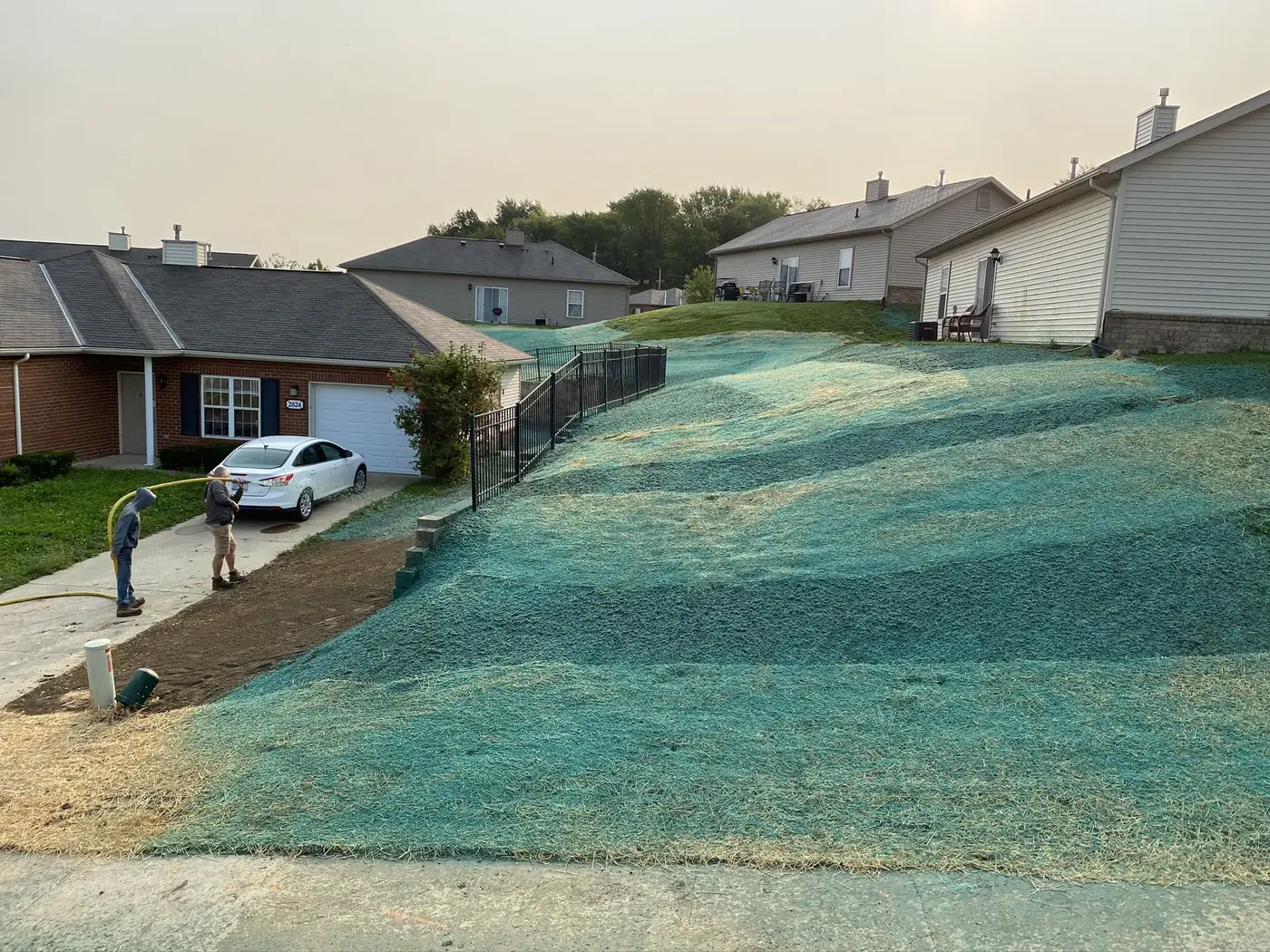
How Much Does Hydroseeding Cost in North Carolina?
National cost guides put hydroseeding at about $0.07 to $0.35 per square foot. One guide lists $0.12 to $0.35, and another lists $0.07 to $0.21. Most hydroseeding companies also set a minimum job fee of $300 to $500 or more.
By lawn size, one guide puts a 5,000 square foot lawn at $1,000 to $1,750. A full acre runs $5,000 to $8,500 in the same guide. These are market numbers, not our price list. On a steep mountain lot, slope and ground prep can push a job higher.
What does hydroseeding cost per square foot and per acre?
Hydroseeding is priced by the area seeded. Here is what one national guide lists by size.
| Area seeded | Typical total in one national guide |
|---|---|
| 2,000 square feet | $500 to $700 |
| 5,000 square feet | $1,000 to $1,750 |
| 8,000 square feet | $1,600 to $2,500 |
| 1/4 acre | $1,900 to $2,800 |
| 1/2 acre | $3,500 to $5,500 |
| 3/4 acre | $4,700 to $8,000 |
| 1 acre | $5,000 to $8,500 |
Per square foot, large areas come out lower than small ones. A small lawn often runs into the minimum job fee first. That is why 2,000 square feet still starts at $500 in the table.
Hydroseeding sprays seed and a fiber mulch onto bare ground in one wet mix. Our hydroseeding service covers new lawns, graded house sites, cleared ground and cut banks.
What drives the price of hydroseeding on a western North Carolina lot?
Size sets the base price. On mountain ground, five more things move the number.
Slope and tackifier
Steep banks cost more to seed. One guide says steeply sloped areas can add $0.05 to $0.10 per square foot. Another says the per square foot cost can double for the sloped area.
Slopes take extra material and labor. The mix also needs a stronger binder to stay in place. That binder is tackifier, which gives the slurry extra grip on steep ground.
The state’s erosion control manual says wood fiber mulch does not give enough erosion protection used alone. On steep slopes, it says a hydroseeder slurry may be used to tack straw mulch in place. A steep mountain bank may need straw under the slurry, and that adds material.
Soil prep and grading
Seed goes on after the dirt work is done. One guide lists resloping a yard at $700 to $2,500. Mountain lots often sit on rock and red clay, so the ground may need work before any seed goes down.
On a new house site, the rough grading is part of the site development work that comes first. When a bank needs cutting back, our excavators do that as excavation work.
The seed mix
The extension service says tall fescue is best adapted to the mountains and piedmont. Ask which grass seed is in the mix, since the seed is part of the price.
Additives
Optional additives each raise the price by about $0.02 to $0.04 per square foot. One guide lists weed, grub and fungus control, biostimulants and moisture retainers. Each one is a line you can take or leave.
Access and water
The slurry sprays from a tank through a hose. A bank far from the driveway takes more hose and more time. One guide lists hydroseeding labor at $37 to $65 per hour, so extra time shows in the price.
Water is the other cost. One guide says to water lightly 2 to 3 times a day until the seedlings take hold. Steady moisture matters most in the first 4 to 6 weeks. Plan who does that watering and where the water comes from.
How does hydroseeding compare with seed and straw or sod?
Sod costs far more to put down. One guide lists sod installation at $1 to $4 per square foot. The same guide lists hydroseeding at $0.12 to $0.35. Sod covers the ground the day it goes down. On a steep slope, though, the rolls may shift before the roots take.
Hydroseed takes longer to fill in. One guide says it sprouts in 7 to 14 days and reaches mowing height in 4 to 6 weeks. The mulch and tackifier bind the slurry to the soil, which helps on slopes.
Seed and straw means seed spread by hand or with a spreader, with straw laid over it. Ask for it priced as its own line on the quote. On a steep bank, the state manual’s straw and slurry pairing uses both methods.
When should you hydroseed in the North Carolina mountains?
The extension service says cool-season grasses are best seeded in early fall. Early spring seeding gives fair results. Tall fescue is a cool-season grass, so early fall is its window too.
A graded site cannot always wait for fall. State law puts a clock on bare slopes, covered in the next section. Temporary cover can hold the soil until the lawn grass goes in.
What does North Carolina law say about bare graded ground?
State law sets a 21-day clock on bare graded slopes. Slopes left exposed must be planted or covered within 21 calendar days of finishing any phase of grading. Temporary or permanent ground cover both count.
A bigger job adds paperwork. Work that disturbs more than one acre needs an approved erosion and sedimentation control plan. That plan is filed 30 or more days before the work starts.
Some counties and towns run their own erosion programs with stricter lines. Macon County’s land disturbance form, for one, calls for a plan at half an acre disturbed. This is general information, and the office that reviews erosion plans has the final word.
What should a written hydroseeding quote cover?
Two quotes only compare when they price the same work. A written quote should spell out:
- The square footage to be seeded, with any steep banks marked
- Any grading or soil work before the seed goes down
- The seed mix, such as tall fescue for a mountain lawn
- The mulch, and the tackifier on slopes
- Each additive, priced on its own line
- Who waters the new seed, and for how long
- Whether a minimum job fee applies
How do you get a number for your own lot?
The ranges above are a starting point. Your number depends on the area and the slope, and prep work and access move it too.
Sanders Contracting is based in Murphy and does hydroseeding across western North Carolina and the tri-state area. We look at the job and put the quote in writing. See how the work runs on our hydroseeding page. Call or text (828) 342-1467 to set up a look at your ground.